
The bedroom to Universal.
Issam Alnajjar was born in Amman on May 12, 2003. He was seventeen when "Hadal Ahbek" — I'll Keep Loving You — found its audience across the Arab world. The song's melody was quiet and devastating: an Arabic-language ballad that sounded like something a generation had been waiting for without knowing it. It reached Wassim Slaiby, the Lebanese-Canadian music executive who manages The Weeknd. Slaiby had just launched Universal Arabic Music — the first dedicated Arabic-language imprint of Universal Music Group — and Issam became its first signed artist.
He was not yet old enough to vote. He was the first artist signed to a major label built specifically for the Arabic-speaking world, by the man who helped shape one of the biggest pop careers of the last decade. That is not a small thing to absorb about a seventeen-year-old from Amman.
"I make music that I hope can reach people everywhere, not just in the Arab world." — Issam Alnajjar
Why he matters.
Issam is Jordanian — his parents are Palestinian, he was born and raised in Amman. The distinction matters to him and it should matter here: he represents a new generation of Levantine youth building global careers while staying tethered to where they come from. He writes in Arabic, produces with a clarity that draws from R&B and indie pop, and makes records that live comfortably alongside Western charts without apologizing for their origin. For the young Arab-Americans in the OC crowd — especially the Jordanian and Palestinian communities — he is the version of themselves that made it heard.
What to expect at OC MENA.
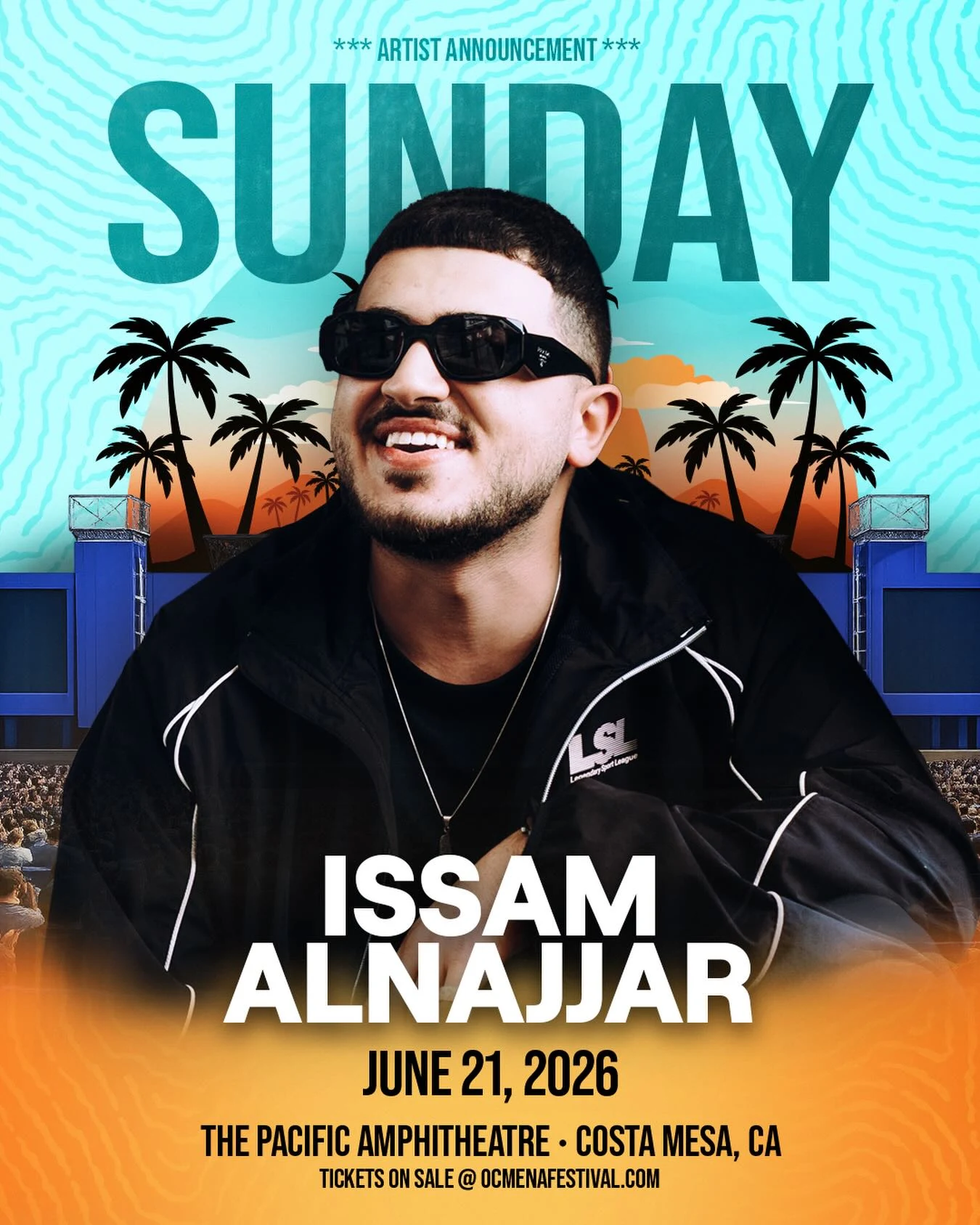
Issam performs with intention. The set is intimate by design — space around each song, nothing to prove. He is still in the early phase of his live career, which means the OC crowd gets to be part of a story still being written. Come early. The front rows fill for a reason.
Get Tickets