
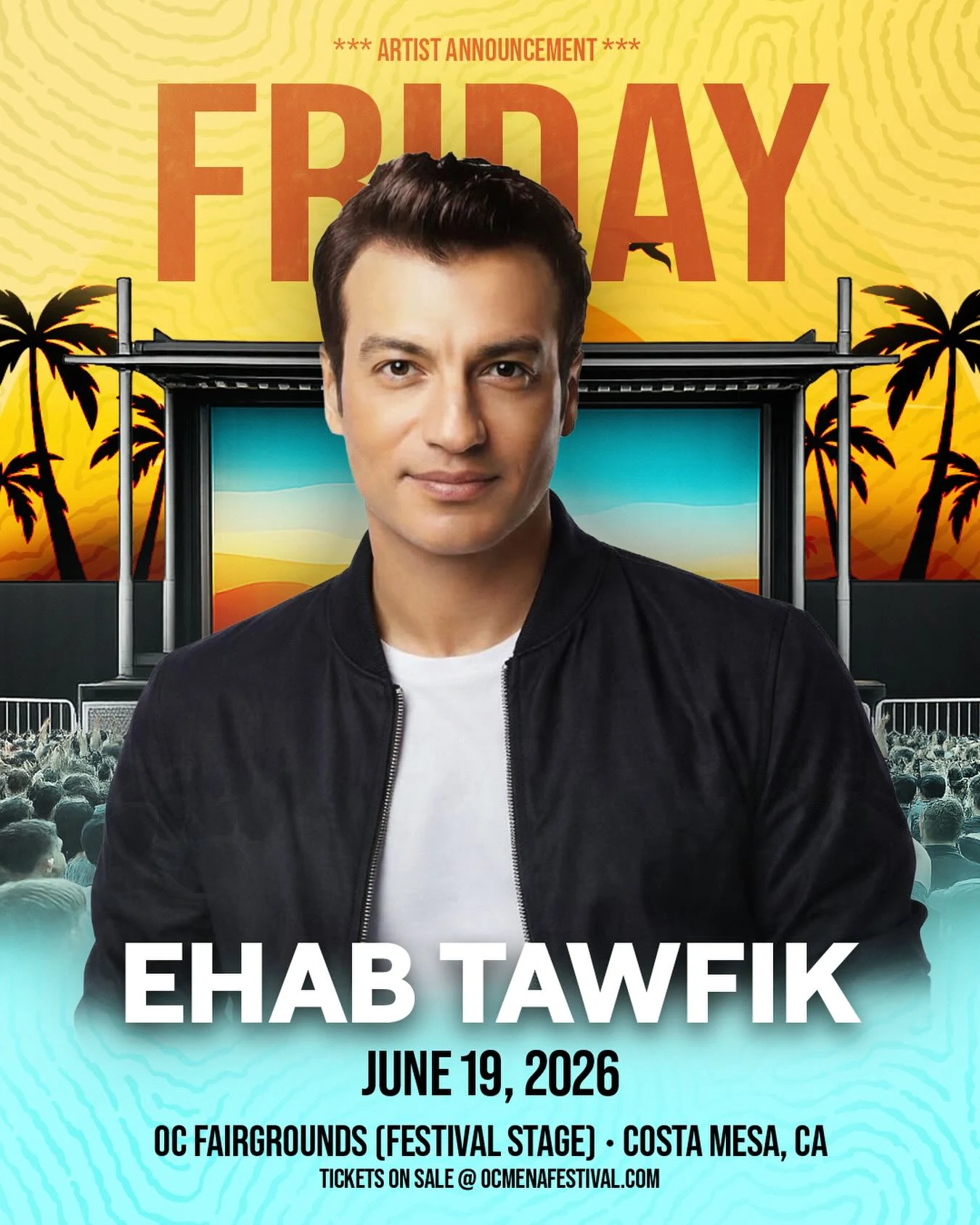
The soundtrack of a generation.
If you're Arab and you're over thirty, Ehab Tawfik was the radio. He was born in Cairo on January 7, 1966, and debuted in 1990 with "Dany" — arriving at exactly the moment that shababi and al-jil were defining a new generation of Egyptian pop. Shababi was the youth-oriented, rhythmically lighter genre that broke from classical tarab: shorter songs, sharper hooks, and voices that spoke directly to young Egyptians. Ehab Tawfik became its most recognizable face, influenced heavily by the production style of Hamid el-Shaeri, who was reshaping the Egyptian pop sound in that same era.
"Allem Albi" was everywhere. "Habibi Rah" was everywhere. These weren't hits — they were the emotional furniture of the whole diaspora. He sang what people were feeling in Cairo, Damascus, Beirut, and Dearborn at the same time, in a voice that everyone trusted.
"إيهاب هو الصوت اللي كنا نلتقي عليه كلنا." — a taxi driver in Amman, 2015
Why he matters.
Because he's the reason a festival like this can exist. The generation of artists on the Saturday and Sunday bills grew up on Ehab Tawfik. Dystinct's sense of melody, Dana Salah's love of Arabic phrasing, Assaf's understanding of tarab economy — you can trace lines from each of them back to the records Ehab was making in 1993. You don't have to. But you can.
Putting him on Friday isn't sentimental. It's structural. He opens the festival because everything else on the bill is, in one way or another, downstream of what he built. And because — and this is the simple thing — your parents are coming on Friday and they would like to hear him.
What to expect at OC MENA.
Full orchestra. The real thing — oud, qanoun, ney, violin section, tabla, riqq, and enough backup vocalists to build a wall of sound. The set will lean heavy on the classics — he knows what everyone's here for — but expect a couple of newer pieces and at least one surprise duet. He's been doing this for almost forty years and he still performs like he's got something to prove.
This is the show to bring your parents to. Or your aunts. Or the whole family. Bring kleenexes. Someone near you is going to cry.
If you've never heard him.
Start with "Dany" — his 1990 debut, which set the template for everything that followed. Then "Allem Albi" — three minutes in, when the strings come in under the chorus, you'll understand why Egyptian pop in the 1990s sounded the way it did. By the time you've spent an hour with the catalogue, you'll understand why the festival opens with him. And why your parents will be in the front row.
Get Tickets